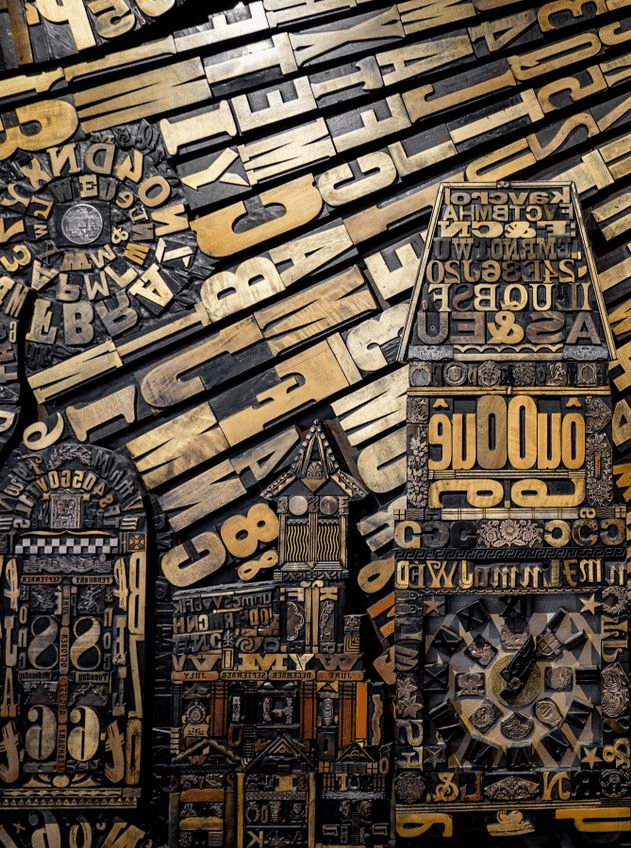
A short story that got a little out of hand (like all good writing should) about word choice when scribing.
Where do you get your..?
It’s not common, but I do sometimes get asked where I “Get my ideas from?”. The answer is, rather prosaically, I don’t exactly know. I have a mind that seems to make random connections from things I see, hear or read, joining them together in new and hopefully interesting ways. And it is “always on”. I do not have a creative process for ideas, they just come unbidden, usually when I am in the middle of something else, and far from a notepad.
As to where I get my WORDS, well that is a very different thing, and one I am happy to share with you.
Firstly, there are those words that I use with the utmost of care. Words placed with precision and intended to have the largest impact upon my readers. These are the words I use in my poetry, when just the right phrasing is required. These words I buy individually, handcrafted by Ms Sun, my most favoured purveyor of collections of morphemes, and who I have been patronising with my business for over thirty-five years. Her dedication to choosing the perfect substrate to carve or cast the word from is unsurpassed. If I am in need of something natural sounding, with a solidity to bear the load of the verse but with a warmth, then I know she will have just the word I need sculpted from teak, oak, or if I am in need of a more esoteric synonym, ebony or olivewood. Delicate, fragile words she casts from glass, wonderful filigree things which catch the light, and the mood just so, adding that sense of brittleness and uncertainty that the entire line could shatter if handled incorrectly. Where precision, yet a lightness is needed, Ms Sun, being one of only six practitioners still working in the fields of lexical origami and kirigami, will be able to supply, or if the occasion demands, craft me exactly what I need in a perfect fusion of form and function. She is an artist in every sense of the word, if you will excuse the pun, and her work deserves only pride of place in my own, far more meagre output.
As much as I would wish it, for words which go to make my short stories, I simply cannot afford Ms Sun’s fees, lest even this short tale cause such a hole in my overdraft as to be perilous to my continued output. I am not blessed with a bestseller yet that would grant me the funds to utilise her artistry at my whim. That is not to say I do not seek out the very best I can afford, but it is perhaps important to know the distinction. For those words I am fortunate enough to know one of the best local wordsmiths, who through the very sad, but not unexpected loss of her father, recently took over the forge at which she had apprenticed with him since she was old enough to hold a hammer, or to cast molten metals. Her father taught her everything he knew, yet she has surpassed him, perhaps as all children should if given the proper encouragement from a parent. It is in this delta of difference that I have begun to notice the initially subtle, but now far more prevalent influence of Imogen’s craft in my own work. Where her father’s words had, understandably been solid and dependable, with a hint of their base metal shining through, Imogen’s words, while still carrying those same qualities, have within them a sharper, more definite and sometimes harder edge, which is influencing my own work. When I read what I have written with her work, I can feel, and almost hear the hammer hitting the anvil as she sweats and toils in her temple to Vulcan. There is heat, there is purpose to these words, forged perhaps in the furnace her own grieving and the rage at her loss. Whatever the alchemy which is occurring as she toils, it has most certainly changed my own work, giving my short stories, contradictorily both a sharp and blunt edge at the same time. Sentences end with those hammer blows, and the whole feel finished, complete, and certain.
Novels, again, require a different source, a different supplier. These words I purchase in bulk, by the tens of thousands, usually enough give or take, for an entire novel. Prepositions, adverbs, pronouns, conjunctions – all of these I merely need a plentiful supply of, and so long as they are well made from sturdy materials then I will buy as locally and cheaply as I can. I live in a system, however much I may not like it, but I try to be as ethical a consumer as possible, buying locally as much as possible even for my more extensive projects. I try to keep my word miles as low as possible. I do know of other writers who invest in mass-produced, cheaply priced, but with high externalities cost words of these types, and if that works for them then more power to them. I am not here to tell another scribe how they should approach their art. For me however, even my procurement ‘at scale’ needs to have some connection to the source of the finished product. Is the reader able to tell the difference with the finished product? Will they know or even feel the locally sourced “before” against a factory produced “beside”? I am not sure that is the proper question, if I am honest. To me it is just the kind of writer I am.
Scaling down once more in size of output and scale of ambition, as if retreating from the high ground of a novel length work, there are the words I am required to use in my employment (you did not think I sustained myself by my scribing alone, did you?). These words are used to draft emails, reports, memoranda and other such corporate missives that exist within a wholly different world than my creative output. I am fortunate enough that my employer has a corporate subscription to a ready supply of words, mined and minted somewhere overseas, in I hope, at least conditions not unfavourable to their producers and for a living wage. This rather broader but shallower pool of words affords me far less room for expression, the word choice available to me by design limiting my scope for an imaginative flourish to that of formatting a word in bold or italics as a means of providing some intentionality to them. This is not the worst of it, however. The most notable drawback of the arrangement and the limited lexicon of words from which I am able to choose from is that I am occasionally left with no option but to place such cliches as “reach out”, “touch base” and other vulgarities in my output. But even in these, most limiting of circumstances I find myself able to add a small lexical flourish when I chance upon an unused “outwith” or an “aegis” tucked away in some corner of the repository which no-one has looked at. I drop these tiny wonders into my corporate missives before sending them on their way, hoping, perhaps vainly, that someone may see them and be cheered at the small gift I have given them.
Lastly, and most recently I have needed to secure a new supply of words for a very specific purpose – that of feeding the “artificial intelligence” tools I am compelled to utilise during my working days. These slop engines deserve nothing but my contempt, built as they are on stolen language and human creativity. As such, I have taken to effectively “dumpster diving” for words. That is buying bags of corporate refuse containing discarded, or shredded and broken up words, usually made from some cheap plastic and destined to pollute some landfill site somewhere, and then re-assembling them, ransom note style into my input prompts. For sure, it is somewhat time consuming, and makes little difference in the overall scheme of things, but as a creatrix of worlds built using the honestly obtained and properly sourced labours of others who produce my words, I am never going to feed the hours, days, weeks of work my suppliers put into crafting me a perfect sequence of letters or phonemes, just for them to be turned into tokens to be ingested and then masticated to a pulpy diffuse mass of ones and zeroes by something that was built on stolen intelligence and skill, before it vomits up a stochastically likely response. That is the exact opposite of what I, and all like me do. We do not select our words because they are statistically more likely to go together. We make conscious choices to find combinations which have never been arranged in just that way before, and if I am forced to use these unholy necromantic systems, breathing stolen undead life into patterns of words that are far far from being greater than the sum of their parts, then I will feed them what has already been discarded, and by my actions further pushed from any context they once may have possessed. If I am to get slop out, then I will put slop in.
Footnote – the image for this story was found on Magda Ehlers’ Pexels page which you can find: https://www.pexels.com/@magda-ehlers-pexels/